
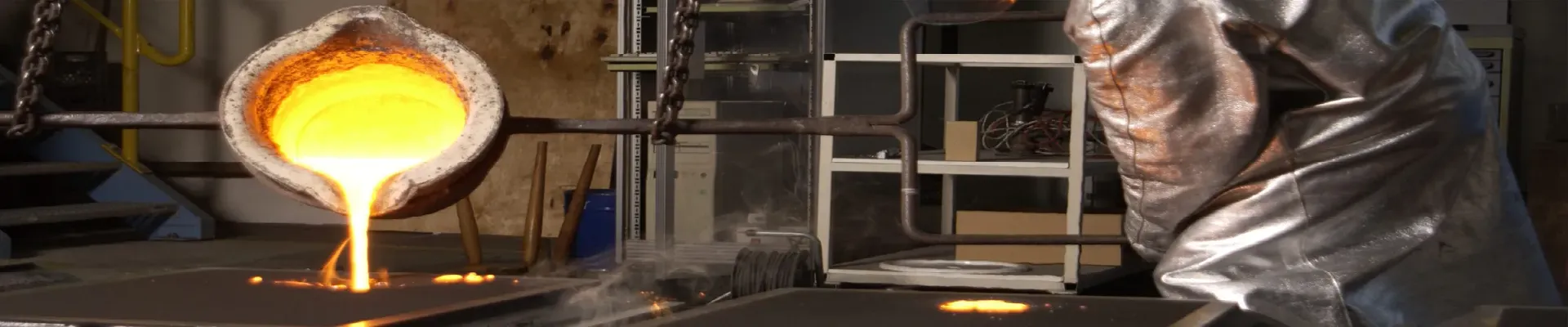
Generally a model (pattern of the casting part) is required for moulding accounting for compensation of volumetric shrinkage during alloy solidification. Sand casting moulds are produced in at least two-part patterns to allow for quick and easy shake-out after casting. The mould is put under thermal and mechanical stress so highly in the course of the casting trial, so that it looses its original strength and can therefore only be used once.
Volume compensation in the liquid state is incorporated by the typical use of a single or several feeders depending on the actual used casting alloy. Inner contours or cavities are produced via separately manufactured cores. Solidification can be directed by integrated cooling chills.